Okay, freelance friend. Let’s have a real talk.
Look to your left. Now look to your right. What do you see? Is it a neatly organized, minimalist workspace that sparks joy and focus?
Or is it… stuff?
For me, it was always stuff. I became a freelancer for the freedom. I stayed for the chaos. My “office” was the corner of the living room. My filing system was a growing, guilty pile of client binders and sample products in the closet. My “inventory” for my little e-commerce side hustle was slowly annexing the bedroom. My brain felt as cluttered as my space.
I’d sit down to write, and my eyes would land on the box of holiday decorations I needed to deal with. I’d get an idea for a client project, then spend 20 minutes digging for a specific notebook I knew was in here somewhere. The mental load was constant. I was renting a two-bedroom apartment, but one of the bedrooms was just a very expensive, anxiety-inducing storage closet.
Then, I did something that felt almost like cheating. I got a storage unit.
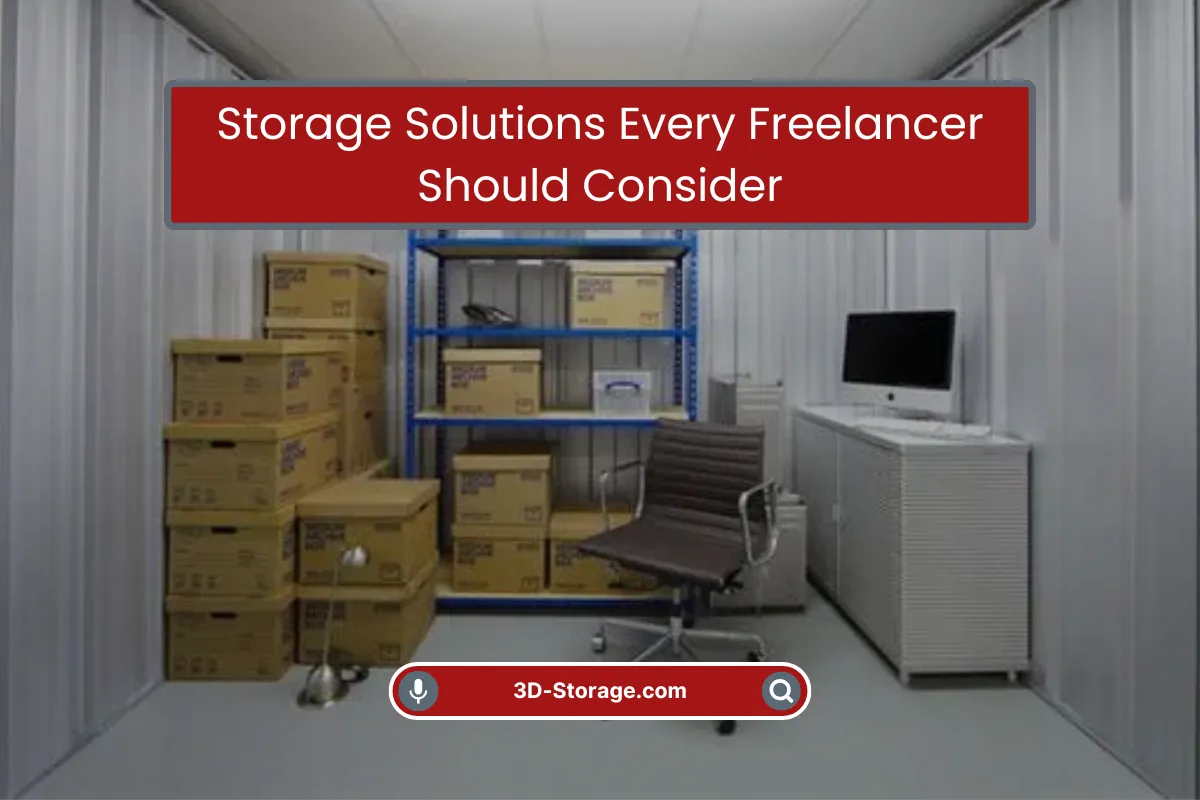
Not a giant warehouse. A small, clean, 5×5 space. It cost less per month than two fancy coffees a day.
Let me tell you, it wasn’t just a place for my stuff. It was a productivity revolution. Here’s the real, no-bluff breakdown of what changed.
The Mental Declutter Came First
The physical act of moving boxes was a workout. But the mental shift was the real prize. That box of sentimental items from college? Not my problem today. The ten years of tax documents my accountant said to keep? Filed away, out of sight, not nudging my anxiety. The stock for my online store? Organized on shelves, not strewn across my floor.
Walking back into my apartment after that first drop-off was wild. The air felt lighter. The visual noise was gone. When I sat at my desk (the dining table, let’s be real), there were fewer “hey, remember me!” distractions pulling at my focus. My workspace, however small, was now a workspace. Not a multi-purpose room of guilt.
It Became My Business Basement
I started thinking of the unit not as a dumping ground, but as my company’s logistics wing.
- Archive Section: One shelf for old client projects. Physical portfolios, contracts, the weird swag they sent me. If I ever need it, I know exactly where it is. It’s not haunting my closet.
- Inventory Warehouse: My e-commerce stuff got its own zone. Bins labeled by product type, shipping supplies in a box. When I got an order, my “fulfillment process” was a quick 10-minute trip to grab the item and pack it. No more turning my living room into a packing station for three hours every Wednesday.
- Project Land: That big rebranding project for a local brewery? It came with boxes of their old merch and marketing materials for reference. Instead of it living in my car trunk for two months, it went straight to the unit. I could visit it when I needed inspiration, then shut the door on it.
The Flexibility is a Safety Net
Freelance income is a rollercoaster. There was a slow period where I seriously considered downgrading to a cheaper, smaller apartment to cut costs. The panic wasn’t about the move—it was about my stuff. My business stuff. My life stuff.
With the storage unit, that panic evaporated. I could move to a smaller, more affordable place and keep my business intact. The unit became a fixed cost, a stable home for the assets of my work, regardless of where I slept. That security? Priceless. It let me make smart financial decisions without feeling like I was dismantling my company.
How to Do This Without It Becoming Another Chore
This only works if it’s simple. Here’s my hard-earned advice:
- Go Small & Smart: You probably don’t need a 10×10. Start with a 5×5. It’s shocking how much you can fit with good shelves. And for the love of all that is holy, get a climate-controlled unit. Your paperwork and gear will thank you.
- Organize on Day One: Don’t just throw boxes in. Bring a cheap shelving unit. Use clear, stackable bins. Label everything with a fat Sharpie. “CLIENT FILES – 2022.” “PHOTOGRAPHY BACKDROPS.” “XMAS DECOS.” Future-you will weep with gratitude.
- Make it a Ritual: I go every other Monday morning. It’s on my calendar like a client meeting. I swap out what I need, drop off what I’ve archived, and I’m done in 30 minutes. It’s a business admin task, not a burden.
The Bottom Line
We spend so much on digital tools to manage our time and focus—project management apps, focus timers, noise-cancelling headphones. And those are great. But sometimes, the biggest blocker to deep work isn’t digital, it’s physical. It’s the tangible clutter of a life that also has to be a business.
Renting that little unit was me finally admitting that my home couldn’t be everything. It couldn’t be my sanctuary, my creative studio, my warehouse, and my archive. Something had to give.
For me, and for a lot of freelancers I’ve talked to, using a service like yours isn’t about hoarding junk. It’s about intentional space management. It’s the deliberate choice to move the background noise of stuff off-stage so you can finally focus on the main performance: your brilliant work.
It’s not running away from clutter. It’s creating a dedicated, sane space for it to live, so you can create a dedicated, sane space for yourself to thrive.



0 Comments