
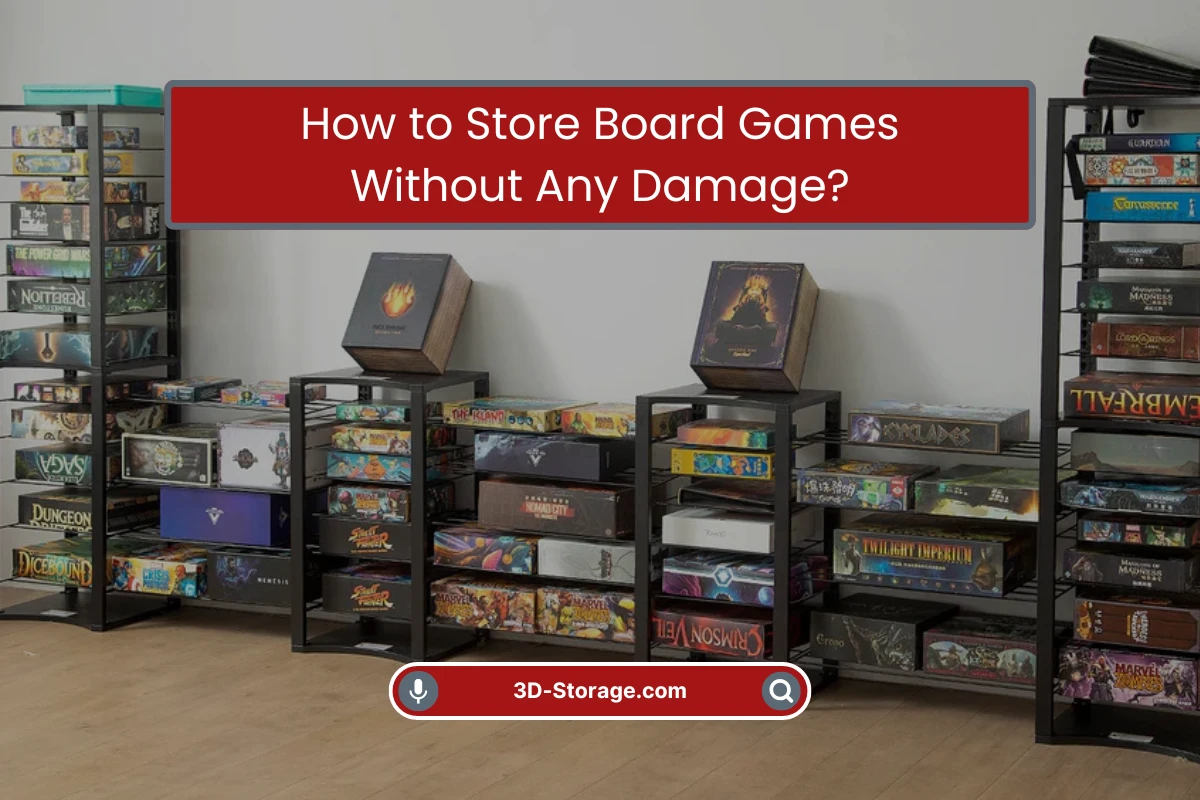
I’ll be honest with you. I wrecked a $400 board game once without even knowing it.
It was sitting on a shelf in my living room. Not in direct sun. Not near a radiator. Just… existing. Two years later I pulled it down to play and the box looked like someone had dipped the bottom corner in weak tea. Yellow. Crinkled. The board inside had a permanent wave to it—like a potato chip that forgot to be flat.
I was mad for a week. At myself. At my house. At the stupid game for being so delicate.
But here’s what I learned after talking to way too many collectors and destroying another game or two (unfortunately): regular homes are actually terrible places to store cardboard. And nobody tells you that when you buy your first “rare” game.
So let me save you the heartache. Here’s what actually works.
First thing you need to know about yellowing
Yellowing isn’t just sun damage. I used to think if I kept games away from windows I was safe. Nope.
Turns out fluorescent lights do it too. LED lights are usually fine, but those old tube lights in basements or garages? They emit UV. Not as much as the sun, but enough to yellow a white box over a couple years. Also, the cardboard itself just oxidizes over time—like a cut apple turning brown. That happens faster in warm air.
So what do you actually do? You keep games in the dark. Not “kinda dim.” Dark. A closet with a door that stays shut. A drawer. A tote with a lid. If you can see the box without turning on a light, that’s too much light for a thirty-year-old game you want to keep white.
I’m serious. I know someone who keeps his rarest game inside a pillowcase inside a closet. Looks ridiculous. Game still looks like it was printed yesterday.
Warping is a different monster
Warping happens when one side of the board or box gets wetter or hotter than the other side. Cardboard expands when it takes on moisture. So if the bottom of your box is sitting on a cool concrete floor and the top is in warm room air, the top expands, the bottom doesn’t, and suddenly your box lid curves upward like a frown.
Same thing happens if you stack games vertically. The bottom edge of the box takes all the weight, moisture collects along that edge from your breathing and cooking and showering, and boom—wavy cardboard.
Here’s what I do now and it’s never failed me:
- Stack games flat. Always. I don’t care if vertical looks cleaner.
- No more than four games in a stack. Five if they’re small boxes.
- Put a piece of archival cardboard (or even a clean piece of foam board) between each game. This stops pressure points.
- Never store games directly on a floor. Not even carpet. Carpet holds moisture like a sponge. Put down a piece of plywood first, or better yet, a plastic shelf.
The humidity thing nobody checks
You probably don’t own a hygrometer. Most people don’t. I didn’t either until I lost that first game.
Go spend twelve bucks on one. Put it in the room where your games live. Leave it for 24 hours.
If the number says over 55% humidity, you have a problem. That’s mold territory. Cardboard at 60% humidity for long enough will start to smell like a basement. Then it’ll warp. Then it’ll grow spots.
Under 40% humidity is also bad—cardboard gets brittle and corners snap off when you open the box.
You want between 40% and 50%. That’s the sweet spot. That’s where games can sit for decades and not change.
If your room is too humid, get a small dehumidifier. They’re like forty bucks. Cheaper than replacing one game.
If your room is too dry (happens in winter with heaters running), get a small humidifier or just put a shallow bowl of water near the games. Refill it every few days.
What about those little silica packets?
Yeah, throw them in every box. But here’s the thing most people mess up—you have to replace them.
Those little packets that come in shoe boxes? They get full of water after a few months. Then they stop working. Then they actually start releasing moisture back into the box if the room gets dry.
Buy the kind that changes color. Blue means dry. Pink means full. Replace them when they turn pink. I do mine every six months whether they look full or not. Costs like ten cents per game. Worth it.
Where NOT to store games (learn from my mistakes)
I’ve tried all the wrong places so you don’t have to.
- Garage – temperature swings from freezing to 120 degrees. The expansion and contraction will pop the glue on box corners. I had a copy of Fireball Island that literally fell apart at the seams after one summer in the garage.
- Basement – even a “dry” basement has humidity. Basements are underground. The walls weep moisture. You can’t see it but your cardboard can feel it.
- Attic – too hot. Cardboard dries out and becomes crunchy. Then it cracks when you open it.
- Under a bed – dust collects. Dust holds moisture. Plus, if a pipe leaks or a water heater bursts, your games are on the floor. I’ve seen whole collections ruined in one hour from a toilet overflow two rooms away.
- Near an exterior wall – walls get cold in winter. Condensation forms on the inside of the box. You won’t see it until the yellow spots show up a year later.
The “tote method” that actually works
If you really care about a game, here’s what you do.
Buy a plastic tote with a rubber gasket in the lid. Not the cheap ones with holes. Spend the extra five bucks. Put your game inside. Throw in two or three silica packets. Close the lid.
Now put that tote somewhere dark and room temperature. A closet is fine. A spare bedroom is fine.
That tote creates a microclimate. Humidity stays stable. No dust. No bugs. No light. I have games in totes that I haven’t opened in five years and they still smell like new cardboard when I pop the lid.
For really expensive games—the thousand-dollar kind—I put the game in a bag, then in a box, then in a tote. Triple protection. Looks paranoid. Works perfectly.
One thing about your storage space at home
Most of us don’t have a dedicated game room with perfect climate control. I get it. I live in a normal house with normal closets and a normal spouse who doesn’t want totes stacked everywhere.
If you’ve got more than twenty rare games, you’re going to run out of good storage space fast. That’s just math.
We built our storage unit service specifically for people like you—collectors who need a clean, dark, temperature-stable place to keep cardboard that matters to them. No sunlight. No humidity spikes. No basement smells. Just rows of shelving with games stacked flat, exactly how they should be. You can come grab a game whenever you want to play it, then bring it back to safety.
It’s not for everyone. But for the games that would break your heart to replace? Worth thinking about.
Last thing before I shut up
Check your games twice a year. I do it in spring and fall when the seasons change.
Open every box. Feel the cardboard. Is it still stiff? Does it smell like paper or like must? Run your finger along the corners. Any give? Any softness?
Look at the white parts of the box. Any yellow creeping in? Even a little bit?
If you catch problems early, you can fix them. Move the game to a drier spot. Add more silica. Switch to a tote. But if you wait until the yellow is obvious or the board is clearly warped, it’s already too late.
I learned that the hard way so you don’t have to.
Now go check your shelves. And maybe pull out that one game you haven’t looked at in two years. I hope it’s okay. If it’s not—well, now you know what to do next time.





0 Comments