
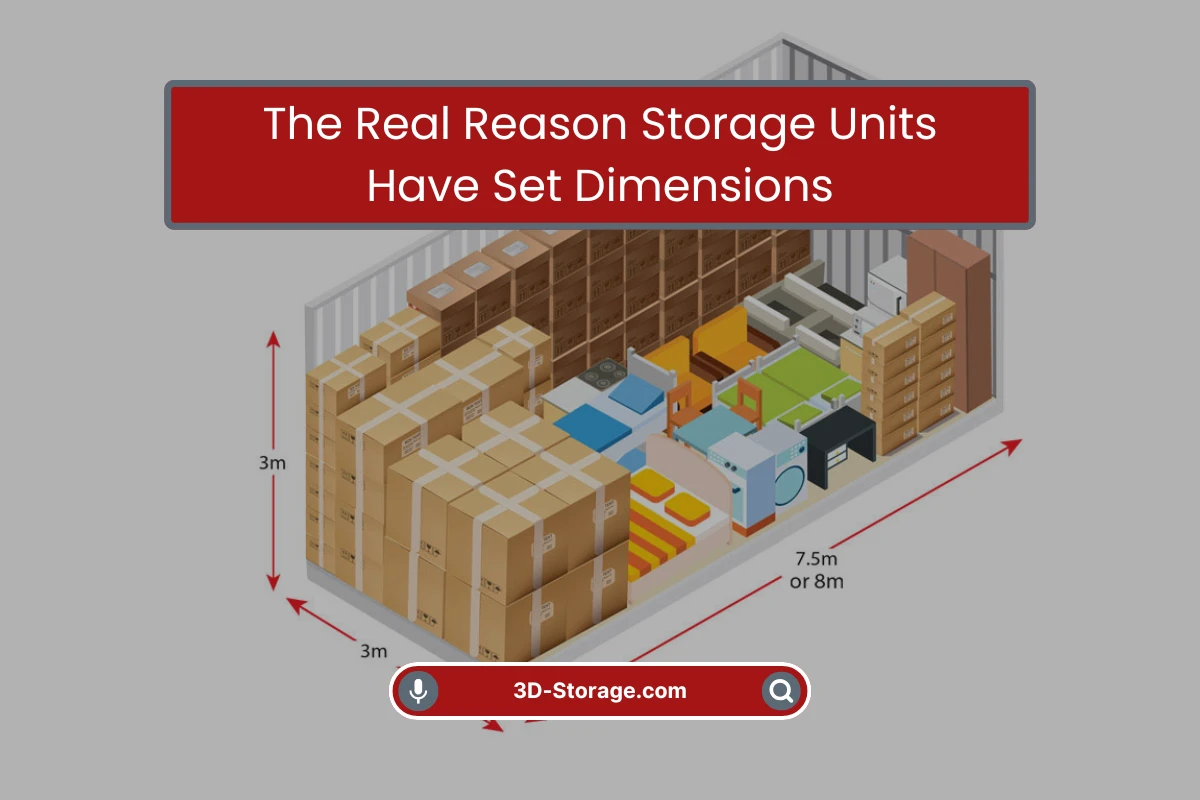
I remember walking into my first storage unit years ago, looked around and thought “who decided on these measurements?” Seemed random at the time. Like someone just drew lines on a concrete floor and called it a day.
Turns out there’s actually real reasons behind it. And honestly once you know why, it makes renting one way less confusing.
The Construction Thing Nobody Talks About
So here’s the deal. Storage buildings get built using the same stuff regular houses are made from. Lumber comes in 8, 10, 12 foot lengths. Plywood sheets are 4×8. Drywall panels same thing.
When construction crews build units, they’re working with these materials. If they tried to make a unit thats 7 feet 3 inches wide, they’d be cutting everything custom. Takes forever. Costs more. Creates tons of waste.
What that means for you:
- Youre not paying for someone to spend three extra days cutting wood
- The units hold up better over time (less patchwork construction)
- When something needs fixing, they can grab standard materials and do it fast
My uncle used to frame houses and he explained it to me once. Building to standard measurements is like cooking with a recipe versus just guessing ingredients. You end up with something that actually works.
Furniture Fits Better Than You’d Think
Ever tried squeezing a couch into an apartment elevator? Not fun. Storage units kinda solve that problem before it starts.
Standard couch? About 84 inches. Queen mattress? 60×80. Dressers usually run 30 to 48 inches wide. Whoever figured out storage dimensions actually looked at this stuff.
Breakdown of what fits where:
- 5×5 units: Think walk in closet. Holds maybe 10 banana boxes plus some small stuff. Good for college kids or if you just need to clear out a bedroom.
- 5×10 units: This ones basically a really big closet. Can fit a whole bedrooms worth of furniture if you stack smart. Twin bed, dresser, nightstand, boxes on top.
- 10×10 units: Half a garage. This is where it gets interesting. You can fit a full apartment here. Couches, tables, bedroom set. We see a lot of people downsizing to apartments grab these.
- 10×15 units: Living room plus bedroom stuff. Families moving between houses use these alot.
- 10×20 units: Standard garage size. Fit a whole house in here sometimes plus a car if you park it right.
At our facility we’ve got all these sizes and honestly watching people load them is like watching someone solve a puzzle. The good kind of puzzle not the frustrating kind.
The Ceiling Height Thing
You know what people forget about? Up. Everybody looks at floor space, nobody looks up.
Standard ceiling height runs 8 to 10 feet. That wasn’t an accident. Regular moving boxes? They stack nice in these spaces. You can usually go 8 boxes high before things get sketchy.
What vertical space actually gets you:
- That 5×5 unit with 8ft ceilings gives you 200 cubic feet
- 150ish moving boxes if you really packed it
- Room for tall stuff like floor lamps or standing shelves
- Bikes hanging from hooks (game changer trust me)
We show people their unit before they rent and I always say “look up, youll store more than you think up there”. Most people never considered it.
Climate Control Changes The Measurements
This ones interesting. Climate controlled units often measure slightly different inside. Not by much but enough to notice.
Air needs to move. When you seal a room up tight and try to keep it 70 degrees year round, you cant just cram stuff wall to wall. The dimensions account for airflow so:
- Your leather couch doesnt sweat
- Cardboard boxes dont get soggy from humidity
- Metal tools dont rust
- Family photos stay flat not wavy
We run climate control at our place and the units are laid out so air actually reaches everything. Grandma’s wooden rocking chair thats been in the family 80 years? Stays solid. No warping no cracking.
The Driveway Logic
Heres something you probably never wondered about. How wide are the hallways? How big are the loading zones?
Storage unit dimensions affect the whole property layout. Drive aisles gotta be wide enough for a Penske truck to turn around. Loading areas need space for you to pull up, open the back, carry stuff in without getting hit by someone else backing out.
What goes into it:
- Truck turning radius (bigger than you think)
- Door swing space (those roll up doors need room)
- Cart pathways (our carts gotta fit everywhere)
- Emergency vehicle access (required by law)
When we built our place we actually watched people test drive trucks through the planned layout. Sounds silly but you learn real fast where the tight spots are.
The Money Side Of Things
Lets be honest. Storage is a business. But the dimensions being standard actually helps you.
Why you win with standard sizes:
- You know what youre getting. A 10×10 in Florida is same as a 10×10 in Oregon
- Prices stay competitive because everyone works with same measurements
- No surprise “oh that unit we described is actually smaller” moments
- You can book online confident your stuff fits
We’ve had people show up with measurements printed out from our website. Tape measures. The whole thing. And you know what? Theyre always relieved when it matches.
How Storage Got These Sizes Anyway
Storage units werent always like this. Back in the 60s and 70s some places were just warehouses with lines painted on the floor. Chaotic. Youd rent a section and hope nobody mixed their stuff with yours.
Over time the industry figured out what worked.
What changed storage forever:
- People started storing lawn equipment (needed wider units for mowers)
- Apartment living exploded (smaller units became necessary)
- Small businesses started using storage for inventory (shelving depth mattered)
- Classic cars needed storing (hello taller doors)
We’ve got customers using units for all kinds of stuff now. One guy stores vintage pinball machines. Another runs her Etsy business out of a 10×15. The dimensions work because they evolved from what people actually needed not what some architect guessed they might want.
Honestly Though
Those numbers you see on storage websites? The 5×10, 10×10, whatever. They look like marketing copy but theyre really just solutions to problems people had 50 years ago. Someone somewhere tried storing a couch in a weird-sized space, got frustrated, and the industry adjusted.
Now you walk into a unit and things mostly fit. Not because of magic. Because generations of storage renters before you figured out what worked.
Next time you’re loading up take a second and notice how your boxes line up with the walls. How your furniture fits without touching all sides. Someone thought about that.
And if you’re around our facility and not sure what size you need, stop in. We’ll walk through it. Maybe grab a tape measure and look at your stuff together. Happens all the time. Better than guessing and ending up with a unit too small or paying for space you dont use.
After all the dimensions are supposed to make your life easier. Once you see how they work you’ll probably wonder why more things aren’t built this thoughtfully.




0 Comments